Showing posts with label WWII. Show all posts

Monday, August 1, 2022

Devotionals for the Heart: Why there is always hope, even in grievous times


Hope in the Grief
A devotional Jessica Brodie

Have you ever experienced a time of loss and sadness that is simultaneously also filled with deep joy? That was our family this week as we journeyed to Ohio to celebrate the life and mourn the passing of my husband’s grandfather.

Grandpa Bob was 95 when he died, and what a man! A World War II Navy veteran who enlisted at age 17 and saw significant action—including the Battle of Iwo Jima, the Okinawa Invasion, and Operation Crossroads for the Bikini Atoll nuclear bomb tests—he also served in the Korean Conflict on the USS Wisconsin. After his discharge, he spent his career in Ohio’s oil and gas drilling operations. He had three kids, then remarried and gained three stepkids, and at his death claimed 12 grandkids (plus spouses) and 15 great-grandkids, all who loved him dearly.

Matt and I and our four kids road-tripped from South Carolina last week for the funeral, joined by parents and a host of other cousins, aunts, and uncles, all of us surrounding Grandma Mary, his wife. At age 99, she and Grandpa Bob still lived in their house. Together, we mourned his death but celebrated his life with deep and affirming joy.

Why joy? See, in addition to being an outstanding person and family man, Grandpa Bob’s most important role was “child of God.” A Christian and active member of his local United Methodist church, one thing we all knew when Grandpa Bob passed on was that we didn’t need to wonder or worry what would become of him. We knew, because he was a follower of Jesus, that he was assured eternal life.

Yes, there were tears at his funeral. We miss him! But there was also… laughter. Giggles. His eulogies at the service—delivered by his pastor, one of his sons and his stepson—recounted stories about mishaps with dynamite and catching himself on fire, his love for John Wayne and gardening, his silliness rolling around on the ground with puppy dogs or playing at Cedar Point.

“Loyal, faithful, and hardworking,” are how his pastor, Jim, described him. “Disciplined but always fair,” his son, Uncle RJ, said.

A man of stories, said everyone.

That’s how I, a latecomer blessed to marry into this family, knew him. Grandpa Bob was an outstanding storyteller. I remember how we’d visit and he’d tell about standing on the deck of his ship in WWII, or about riding horses, another of his loves.

Uncle RJ shared how he had the opportunity these last years to spend at least two mornings a week having long coffee chats with his dad, listening to old tales told and retold, sometimes the same story twice in one day. What always struck RJ was the joy with which he told those stories. That’s what I had loved, too…and, come to think of it, is what always makes an extraordinary storyteller. It’s the love of the tale.

Grandpa Bob had that. He shared that. And oh, what a legacy.

A couple of the grandkids were not able to attend the funeral, and during the service, Uncle Warren shared a special memory one of his own sons had about Grandpa Bob. During their last visit, they’d sat on the porch together talking about the future, and Grandpa Bob passed on some sage advice to him: “We are ultimately measured as men by how we react to uncontrollable things.”

Wise, wise words from a good, good man.

As Pastor Jim said at the funeral, an eternal perspective in this life keeps us in balance. As believers in Christ Jesus, we know infinitely more awaits us in heaven. The casket is not our end.

Each of us who believe can hold fast to the promises of Scripture, promises like 1 Thessalonians 4:13-14: “Brothers and sisters, we do not want you to be uninformed about those who sleep in death, so that you do not grieve like the rest of mankind, who have no hope. For we believe that Jesus died and rose again, and so we believe that God will bring with Jesus those who have fallen asleep in him” (NIV).

It's not that we do not grieve, but that we don’t grieve as others.

Our grief is rooted in hope, in joy, in promise.

We will be together again one day—thanks be to God.

Rest in peace, Grandpa Bob. We love you dearly.

Let’s Pray: Father God, thank You for the hope You give all of us who believe in and follow You: the hope of salvation. Thank You that the casket is not our end. Help us spread Your word to others so they can share in this, too. In Jesus’s Name I pray. Amen.

~*~
Author Bio:
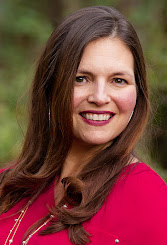
Jessica Brodie is an award-winning Christian novelist, journalist, editor, blogger, and writing coach and the recipient of the 2018 American Christian Fiction Writers Genesis Award for her novel, The Memory Garden.

She is also the editor of the South Carolina United Methodist Advocate, the oldest newspaper in Methodism. Learn more about her fiction and read her faith blog at http://jessicabrodie.com. She has a weekly YouTube devotional and podcast.

You can also connect with her on Facebook, Twitter, and more. She’s also produced a free eBook, 
A God-Centered Life: 10 Faith-Based Practices When You’re Feeling Anxious, Grumpy, or Stressed.

Tuesday, November 24, 2020

Romantic Reads: Kiss Me Once Again (book) by Gail Kittleson


Welcome Gail Kittleson to the blog!

She's here to share the story behind the story of her book, Kiss Me Once Again.

~*~
Kiss Me Once Again: The Story Behind the Story
A guest post by Gail Kittleson

When Glenora Carson’s story first came to me, I didn’t anticipate writing a romance. This World War II tale evolved into just that, however.

Romance has never excited me because I like more complicated stories. Girl gets guy—that’s the basic plotline, right? Well, maybe I had a thing or two to learn.

World War II complicated everything. When you’re worried that a brother, sister, or parent may not return from battle, the entire setting burgeons with obstacles.

Egotistical commanders may make haphazard decisions that lead to needless deaths. The enemy may change tactics and surprise a unit. (This occurred in North Africa when Rommel shocked American commanders by reversing his course.)

On the home front, wild things can happen, as well. In Glenora’s case, just when she thought she had most things managed, her father’s health began to decline. Worry about her brother Red’s ship being struck by a typhoon in Nakagusuku Wan, near Okinawa, most likely had something to do with that.

Time has dragged on since then, with no word about Red. Is he still alive? If he ever comes home, will he be able to marry his high school sweetheart and take Glenora’s place at their father’s garage? That was his plan before December 7, 1941, but so much has happened in the interval.

For one thing, Glenora has been filling his spot there...will she have to continue wielding her wrench and pliers for the rest of her life? She’s already sacrificed her college scholarship and dreams of teaching home economics to keep the garage open.

Then, out of the blue, a convalescing soldier named Hank returns to town. With his bent for mechanics, his uncle volunteers him to help out at the garage. Thankful she can now devote her time to organizing the books, Glenora attempts to add more figures to the “paid” column.

Relieved of crawling under broken-down tractors and farm trucks to diagnose and fix problems, Glenora can now pay more attention to her other tasks...housekeeping, gardening, and contributing to the war effort in every way possible. When her mother died a few years ago, all of these responsibilities fell to her—there simply aren’t enough hours in her day.

Hank brings relief with him, but also another complication. Back in 1941 when her beau went down with the Arizona, Glenora buried her dreams of romance and having a family of her own. Hank’s presence in the shop urges those dreams to surface, but he seems bent on his own dream of studying under the G.I. Bill as soon as the war ends.

On top of that, he’s kind, honest, tenderhearted, and a good worker. If that weren’t enough, he also has a way with her dad.

This is where my plot led me...right into the complications of romance! I hope you like this old-fashioned World War II story.

~*~
Author Bio:

Writing has always been Gail’s passion, but building her self-confidence took decades, so she’s a late-bloomer. 

Her addiction to the World War II era guides her plot choices, and her Women of the Heartland is all about honoring the make-do Greatest Generation who sacrificed so much for the cause of freedom.

Gail and her husband live in northern Iowa and enjoy Arizona’s Mogollon Rim Country in the winter. They also enjoy grandchildren and gardening. It’s no secret why Gail calls her website Dare to Bloom, and she loves to encourage other writers through facilitating workshops.

~*~
Book Blurb for Kiss Me Once Again:


No one ever accused Glenora Carson of being a breathtaking beauty. Her tall, gangly figure and angular face are more solid Midwestern stock than Hollywood glamour. But Joe liked her. He even told her, “You’re the one for me.” He gave her a locket with. his picture inside, to remind her of him while he was away, serving his country on the U.S.S. Arizona.

After December 7, 1941, Glenora shelves her dreams of attending college on the scholarship she was offered by Iowa State University, locks her heart away, and focuses on holding down the home front by helping out the family business—Carlson’s Garage. The grease-stained overalls didn’t do much to compliment her female. figure, but they did cover her female heart well enough.

That is, until Hank Anderson, a wounded warrior back from battle, walks into the garage and into Glenora’s life. Is an old maid’s future Glenora’s fate, or will Cupid throw a wrench in her plans?

~*~
Buy Gail's book on Amazon

~*~
Connect with Gail:
Website: 
http://www.gailkittleson.com/

Thursday, August 20, 2020

My Blog's 10th Year Birthday Bash: Liz Tolsma's book giveaway


Welcome to the 20th day of my blog's birthday bash!

Please welcome my author friend Liz Tolsma.


She's here to give away one of her books!


Enter the book giveaway contest via the Rafflecopter widget the end of this blog post. Only residents of the USA are eligible to receive a signed paperback copy of this author's books. International residents will only receive ebook copies due to costs of mailing books outside of the USA.

Let's learn a little bit more about Liz and her book ...

Author Bio:

Liz Tolsma is the author of several WWII novels, romantic suspense novels, prairie romance novellas, and an Amish romance. 

She is a popular speaker and an editor and resides next to a Wisconsin farm field with her husband and their youngest daughter. Her son is a U.S. Marine, and her oldest daughter is a college student. 

Liz enjoys reading, walking, working in her large perennial garden, kayaking, and camping.

 Please visit her blog, The Story behind the Story, at www.liztolsma.com and follow her on Facebook, Twitter (@LizTolsma), and Pinterest. She is also a regular contributor to the Midwest Almanac blog.

~*~
Back Cover Blurb for Liz's book:


When Harriet Peters came to Boston in 1882, the Robinson family took her in like one of their own, and Harriet became closer to Lizzie Robinson than her own siblings. 

Now, four years later, Lizzie is deathly sick, failing quickly just like several others in her family have done over the past few years. How can so many in one family die from the same mysterious illness? 

Harriet doesn’t have answers, but she is determined to help the family, bringing in a new-to-the-neighborhood doctor, Michael Wheaton.

As Harriet and Michael close in on the answer, putting their own lives at risk, can the cause be found before anyone else dies?

~*~
Enter this book giveaway contest for your chance to WIN a copy of this book by filling out the entry form on the Rafflecopter widget below:

a Rafflecopter giveaway

Monday, February 24, 2020

Devotionals for the Heart: Survivors


Never Forget

A devotional by Glynis Becker

“For He rescued us from the domain of darkness, and transferred us to the kingdom of His beloved Son, in whom we have redemption, the forgiveness of sins.” 
–Colossians 1:13-14 (NASB)

January 27, 2020 marked the 75th anniversary of the liberation of Auschwitz, the worst of the six German extermination camps from World War II. One of the most brutal chapters of human history was, if not closed, then certainly dealt a stunning blow on the day the Allied forces took over and released the seven thousand Jews and others still alive there. 

Unfortunately, more than a million people had been killed in that place before it was shut down. Those lives can never be replaced. I cried watching news stories of survivors walking back through the gates of a place that will no doubt always haunt them.

I watched as a woman stood in a gas chamber, reciting the names of people she’d known, and singing a prayer over the dead. She pleaded at the camera that they not be forgotten. Then a man in his nineties told how he had only recently shared with his family that he was a Holocaust survivor. I can’t even imagine how it feels to keep such a secret for so long.

By the grace of God, none of us will ever have to decide how to deal with a tragedy like this in our own lives and I pray for a world in which these horrors never happen again. But as I was reading these verses in Colossians, I was struck by the fact that in the spiritual realm, we who are believers in Jesus are the rescued, released from the captivity of sin, no longer in darkness, given new life in a new kingdom.

So, as a forgiven people, how should we then live in the world? What should our response to liberation be? Do we have an obligation to tell others about our own rescue, so they can come out of the darkness as well? If we keep quiet, how will anyone know the amazing love and grace we’ve been given? We are witnesses to the greatest miracle of history, but if we don’t tell anyone, how does the good news spread?

We can not live in our sins or remain in our darkness. But we can never forget the rescue. God no longer holds our sins against us and promises in Hebrews 10:17 (NASB), “…their sins and their lawless deeds I will remember no more.” There is a delicate balance between not wallowing in the past and not forgetting where we came from. With God’s help and the guidance of the Holy Spirit, we can find that perfect, narrow path.

Only Jesus can save our souls. We can’t, but we must always be ready with a hand to pull someone through those gates, helping them throw off the darkness and step into the light. Never forget each of us has been on the other side of that gate as well.

Let’s Pray: Lord, allow me to use the darkness I’ve been rescued from to bring light to others. I want to be there to share and encourage as we walk this path together. May you use me to help people who suffer, in both body and mind, everywhere I go. In Jesus’ name I pray, Amen.

~*~
Author Bio:
Glynis Becker writes devotions and inspirational fiction, hoping someday to have a published novel on her resume.

She has co-written several screenplays, including the film Sinking Sand, available on DVD and digital streaming.

Glynis, whose childhood was spent all over the country as an Air Force brat, has called South Dakota home for many years, along with her husband and two teenage children.

When she’s not writing or reading, she is watching more television than she should and crocheting. You can find her at www.glynisbecker.com.

Monday, December 3, 2018

Devotionals for the Heart: Devotion


Hopefully devoted
A devotional by Jessica Brodie

When I think of the word “devoted,” my Gram immediately comes to mind.

A child of the Depression, she learned to make do in a tough world. She moved with her entire family to Miami from Brooklyn, New York, when she was thirteen, and by the time she came of age, World War II was in full swing. She met and married her husband, my grandfather, at age nineteen, and raised three kids in the suburbs while working as a bookkeeper and keeping house.

I loved him dearly, but I imagine my Gramps wasn’t an easy man to be married to—and yet my Gram was always there by his side, devoted, in spite of his temper and other quirks best left to time.

When her children grew up and left home, Gram continued to be a devoted wife, but also a woman devoted to many others in her life. Her widowed mom began a battle with Alzheimer’s, and so my great-grandmother moved in with them, and Gram became her full-time caregiver until my great-grandmother’s death. Shortly after her passing, my Great-Aunt Ethel took ill. Again, Gram didn’t hesitate—Aunt Ethel moved right into the vacant spare bedroom, and there she remained, happy and well loved until her death.

Over the years, Gram took in a host of people in need—my cousin Vikki and Vikki’s young son when they fell on hard times; her childhood friend Annie when Annie’s family no longer had enough space; eventually my Gramps himself, between cancer and a long and difficult battle with dementia. Even a litter of alley-kittens (in spite of Gram’s horrible cat allergy!) became her “flock.”

In her care and devotion for others, Gram embodied love. She embodied Jesus.

Gram’s love and devotion brings to mind for me the Apostle Paul’s reminder to the early church to “be devoted to one another in love. Honor one another above yourselves” (Romans 12:10 NIV).

Devotion is a big word. Essentially, it means “all-in.” It’s a sacrifice of self, a sacrifice much like Jesus made for us on the cross: one that sometimes saps our strength and our pocketbooks, our time and our energy. It means giving relentlessly, radically, fully.

It’s the kind of love embodied by my Gram, who gave of her body, her soul, her time, her heart, her home, her finances—everything she had to care for those under her watch.

Be devoted, as God is, was, and has always been to us—a nonstop, all-in, all-consuming, total love. For in loving others, we love God. And we model God’s love for us.

I pray I can follow in my Gram’s footsteps in my devotion to those in my world—family, friends, neighbors, and those in need.

~*~
Author Bio:
Jessica Brodie is an award-winning Christian novelist, journalist, editor, blogger, and writing coach.  

She is also the editor of the South Carolina United Methodist Advocate, the oldest newspaper in Methodism. 

Learn more about her fiction and read her blog at http://jessicabrodie.com/shiningthelight.


Monday, January 15, 2018

Devotionals for the Heart: War, Veterans and Focusing on God


Keep Your Eyes On The Captain

A devotional by Don E. Atkinson

Some years ago, my Dad, a World War II veteran, told me of his voyage across the Pacific Ocean to the South Pacific theater of war. He and approximately 500 other soldiers were boarded on a liberty ship troopship (LST, as Dad so often referred to it) and set sail with a convoy of ships for the South Pacific theater.

LST’s were approximately 57 feet wide, 440 feet long and cruised at 11 knots (13 mph). Being designed as cargo ships, the LST’s were not heavily armed. Consequently, they relied primarily upon destroyers and cruisers in the convoy for protection from enemy aircraft, war ships, and submarines. Approximately 225 liberty ships were converted from cargo use to troop transport ships, able to transport 550 troops. President Roosevelt nicknamed these ships “ugly ducklings.”


Warning: Enemy Submarines and Crazy Kamikazes!

Because of their vulnerability, about 200 liberty ships were lost to submarine torpedoes, mines, explosions, Japanese kamikazes, and other aircraft during WWII. Dad noted there was a freight load of fear among his fellow soldiers. Due to their extreme fear, and in some cases also sea sickness, many soldiers could not eat much. When they noticed Dad eating well they asked him how he had such a strong appetite in such dangerous circumstances?

Look to the Captain

Dad told his inquirers that early in his wartime voyage he “looked up” to the bridge and noticed their captain did not appear worried. So, he asked himself, “Because the captain is calm in this situation, why should I worry?” Dad did not suffer from sea sickness and with a greatly reduced fear and anxiety level, ate well on his wartime voyage filled with several potential dangers.

How are you doing in your voyage of life? Are you fearing possible “emergencies” or “trials” or “losses” in your voyage that might be compared to deadly enemy submarines? Like Dad, look up to the captain of your boat, Jesus, the author and completer of your faith. Regarding the “voyage” ahead for each one of us, the author of Hebrews exhorted his readers:

“We must keep our eyes on Jesus, who leads us and makes our faith complete...So keep your mind on Jesus, who put up with many insults from sinners. Then you won’t get discouraged and give up." ~Hebrews 12:2a, 3 (The Promise).

Yes, keep your eyes and mind on Jesus. Your boat’s captain is calm, strong, and all-knowing. He will: (1) “lead” you in the various storms of your voyage; (2) help you with “discouragement;” and (3) bring you safely into the harbor. He accomplished this for a WWII soldier years ago and He can do it for you today and in the future!

At the beginning of this New Year, make a resolution to more regularly “look up” and gaze on Jesus, the pioneer and completer of your faith—and the “captain” of your little boat.

~*~
Author Bio: 
Don E. Atkinson was born and raised in Lincoln, NE. He attended Southern Nazarene University (formerly Bethany Nazarene College) and Colorado State University securing a Bachelor of Science degree. Later, he completed his Master of Science degree at Texas A&M University. 

He completed a significant amount of coursework towards a Master of Divinity (M.Div.) degree at Trinity Evangelical Divinity School (TEDS) and Midwestern Baptist Theological Seminary (MBTS).

Don has been active in his local church teaching adult Bible studies and preaching as needed. Married in December of 1982, he has three grown children. Currently, Don and his wife reside near Lyons, NE.


Connect with Don via his website (www.daybydayintheword.org) and his blog (daybydayintheword.blogspot.com).

Tuesday, December 19, 2017

Cozy Christmas Reads: Linda's story


What Would You Give?

A guest post by 
Linda Shenton Matchett

In times of war sacrifice is expected not only from the troops, but from those who remain on the home front. During WWII, Americans tightened their belts as food, clothing, rubber, metal and more were rationed. Women entered the workforce, and men left for parts unknown with the armed forces. Children played with toys that mimicked their parents’ lives and participated in air raid drills at school. However, the thousands of miles that distanced us from the conflict buffered the U.S. from the privation and challenges experienced by the European countries.

With only four miles separating France and England across the Straits of Dover on the English Channel, British citizens lived in fear of invasion. Street and subway station signs were removed to confuse possible raiding soldiers, and people were cautioned not to give directions to strangers. Anxious to win the war, the population was willing to do anything to further the cause.

One of the ways civilians helped was to give up their homes. According to Requisitioned, a book by John Martin Robinson, “the majority of houses of large size in Britain were requisitioned by the government…for use as barracks, homes for evacuees, schools, hospitals, works of art stores, strategic and military headquarters, billets and training premises, even prisoner-of-war camps.”

My story, “A Doctor in the House,” (part of The Hope of Christmas collection) takes place on a requisitioned estate north of London and explores what life was like for the homeowner to have his house converted to a convalescent hospital. Because the requisitioned homes were centuries old, they lacked central heating and other modern conveniences. Constructed of stone and brick, the structures held a constant chill during the cold winter months. Residents had to get creative to provide heat for themselves, and reports abound about furniture, paneling, and even staircases being broken up for firewood.

Nearly everyone used cigarettes at the time, and countless fires occurred due to careless smokers. Episodes are told about soldiers using priceless art work as dart boards, and at Tottenham Park in Wiltshire, the grounds were used as an ammo dump. An accidental explosion blew out every pane of glass in the house and the conservatory. Arundel Castle’s herd of red deer was hunted for food, and at Brocket Hall soldiers carved their names, addresses and phone numbers in the balustrade of the park bridge.

Hatfield House and Heath House served as the inspiration for my story’s setting. Hatfield House was used as a hospital and POW camp, and Heath House was taken over by the Red Cross as an auxiliary hospital for military personnel. The sheer volume of individuals stationed on these properties that previously housed several dozen people at most, created extensive wear and tear, but they did not suffer irreparable damage as so many others did.

Because of hard use or maltreatment, more than one thousand ancestral homes were destroyed or torn down after the war. In 1946, building materials were still rationed and taxes high. Repairs to country homes were done on a shoestring, make-do-and-mend basis, which meant bigger issues were covered over to be dealt with at a later time. But the generations who took over after the war were determined to make a go of it, and thanks to grants, opening their homes to the public, and the use of second-hand furnishings, thousands more homes have survived.

How would you feel about giving up your home?

~*~
Author bio:

Linda Shenton Matchett is an author, journalist, blogger, and history geek. 

Born a stone’s throw from Fort McHenry in Baltimore, Maryland, Linda has lived in historical places most of her life. 

She is a volunteer docent at the Wright Museum of WWII and a Trustee for her local public library. Linda is active in her church where she serves as treasurer, usher, and choir member. 

~*~
Blurb for Linda's novella, "A Doctor in the House", part of The Hope of Christmas story collection:

Emma O’Sullivan is one of the first female doctors to enlist after President Franklin Roosevelt assigned to England to set up a convalescent hospital, and she leaves behind everything that is familiar. 


When the handsome widower of the requisitioned property claims she’s incompetent and tries to get her transferred, she must prove to her superiors she’s more than capable. But she’s soon drawn to the good-looking, grieving owner. Will she have to choose between her job and her heart?

Archibald “Archie” Heron is the last survivor of the Heron dynasty, his two older brothers having been lost at Dunkirk and Trondheim and his parents in the Blitz. After his wife is killed in a bombing raid while visiting Brighton, he begins to feel like a modern-day Job. To add insult to injury, the British government requisitions his country estate, Heron Hall, for the U.S. Army to use as a hospital. 
The last straw is when the hospital administrator turns out to be a fiery, ginger-haired American woman. She’s got to go. Or does she?

~*~
Enter this book giveaway contest for your chance to WIN a copy of this book by filling out the entry form on the Rafflecopter widget below: 

SaveSavea Rafflecopter giveaway

Monday, January 2, 2017

Interview with Terri Wangard, author of Soar Like Eagles

Welcome Terri Wangard to the blog today! 

She's here to talk about her latest release, Soar Like Eagles. It's a delightful romance story that will encourage your heart with its theme of how love conquers all, and its thread of faith will inspire your heart.

Enjoy your time with Terri!

Here's the book 
blurb for Soar Like Eagles


Carol becomes a Red Cross doughnut girl, serving GIs and boosting their morale. Believing wartime romances are doomed to disappointment, she attempts to avoid entanglements and transfers to France, away from Chet, the airman she’s falling for.

Chet’s father always belittled him. Now a well-regarded navigator, he longs to prove him wrong. After he’s ditched in the North Sea, parachuted into France, and been called before a review, his focus changes to staying alive, and winning the Red Cross girl he keeps crossing paths with.

~*~
Interview with Terri Wangard, author of Soar Like Eagles:

Alexis: Soar Like Eagles is book number three in your series, “Promise for Tomorrow.” What is your book series about?


Terri: All three follow B-17 navigators based at Ridgewell, England, during World War II. The first one is shot down in Germany, where he finds a woman he’d gone to school with. The second is interned in Sweden, where he meets the woman who crossed to Europe on the Queen Mary with him. And the third meets a woman at a train canteen who follows him to England as a Red Cross volunteer.

Alexis: What makes Soar Like Eagles unique? Share the storyline.

Terri: Soar Like Eagles features a Red Cross clubmobiler, and you won’t find many, if any, novels about that. She wants to do her part for the war, but struggles to maintain her ideals. He joins the air force, hoping to find peace.

Alexis: Tell us about the heroine of your story, Carol. Describe her looks, personality, passion and hope.

Terri: Carol is named for my mother, who I think would have made a fine RC volunteer. The fictitious Carol is a newspaper reporter writing about social events. She wants to be more involved in the war effort and contribute in a meaningful way, which does not include describing ladies’ gowns at a Christmas party. The book cover pictures her well.

Alexis: Why did Carol decide to become a Red Cross doughnut girl?

Terri: She joins the Red Cross to find that meaningful contribution. Many girls serve overseas. Working in a factory may be a necessary and worthwhile occupation, but she wants to be closer to the action and the fighting men.

Alexis: What does Carol like the most about serving GI’s and boosting their morale?

Terri: Most of the men are thrilled to see American women. Many need a listening ear. The girls give them a respite from the consequences and strain of battle.

Alexis: Carol wants to steer clear of wartime romances. Why?

Terri: A close friend married a man Carol rejected within days of the rejection. She came to deeply regret it. Wartime romances, especially those overseas, take place in unnatural situations where they don’t necessarily get to know the real person. Marrying in haste only to discover she’s married a stranger holds no appeal to Carol.

Alexis: Tell us about the hero of your story, Chet. What is he like? Describe his looks, personality, passion and dreams. What is his greatest fear? Why?

Terri: Chet’s mother died when he was young. His father was stern and ridiculing, so his maternal grandparents took Chet. He wants to prove he’s not the worthless kid his father claimed him to be. He excelled at the Pan Am navigation school and was offered a postwar job (if he survived). But always, in the back of his mind, he hears his father’s taunts. He’s tall, dark haired, kind of like Ioan Gruffudd.

Alexis: What is it about Carol that attracts Chet?

Terri: They meet at a train canteen for only a few minutes. He’s quiet, polite, good-natured. And, of course, he’s easy on the eyes.

Alexis: What is it about Chet that makes Carol reconsider wartime romance?

Terri: She sees his concern for his friends, his grief when they die. He comes into the clubmobile’s kitchen and washes dishes when they run short. She sees his humor as he interacts with enlisted men. He’s responsible and well-thought of by the other airmen.

Alexis: Chet is from a troubled family/home life. How did the verbal abuse affect him as he grew up? What made him into the man he is today?

Terri: He’s determined to prove his father wrong. There’s always that extra push to succeed.

Alexis: Chet is a squadron lead navigator. What does that mean? Does he like his job? Why or why not?

Terri: The lead navigator has primary responsibility for guiding the wing, group, or squadron to the target and back to base, often covering hundreds of miles. That’s a pressure-filled job, especially in the often foggy weather. One time he’s blamed for a mission that goes awry, but is exonerated. It is very satisfying when he brings them to their destination and hears, “That’s good work, Chet.”

Alexis: Why did you choose to incorporate the real-life, airplane company legend PanAm into your fictional story? What is the significance of it?

Terri: I want my stories to be solidly based on fact. Even the missions the airmen fly go to the actual targets on the dates they were flown by the 381st Bomb Group based at Ridgewell. Many of the incidents my characters face grew out of real occurrences. I chose PanAm because it provided lots of story possibilities in Miami, primarily for book one, Friends & Enemies, where Chet and Paul (of Friends & Enemies) meet. Historical accuracy is important.

Alexis: What did you enjoy the most about writing this story?

Terri: I love the research. My personal library contains many memoirs by participants of the 381st Bomb Group and other navigators. For this story, I acquired lots of clubmobiler memoirs. I enjoy biographies and find it fascinating to learn about people’s lives. 

Alexis: What was the most challenging aspect of writing this wartime romance?

Terri: Getting it right and believable, and weaving all the threads together. I made flow charts of all three books to make sure their dates match, since they’re all in the same time frame.

Alexis: What’s the moral of this story?

Terri: I don’t start out with one in mind when I write. Carol stood up for her beliefs, which caused trouble with a colleague who was intent on marrying. Chet didn’t let his father’s criticism hold him back; he used it to prod himself to do better.

Alexis: Thanks for the interview, Terri! Do you have any final comments?

Terri: Thank you for having me!

~*~

Author bio: 
Terri Wangard grew up in Green Bay, Wisconsin, during the Lombardi Glory Years. Her first Girl Scout badge was the Writer. 

These days she is writing historical fiction, and won the 2013 Writers on the Storm contest and 2013 First Impressions, as well as being a 2012 Genesis finalist. 

Holder of a bachelor’s degree in history and a master’s degree in library science, she lives in Wisconsin. Her research included going for a ride in a WWII B-17 Flying Fortress bomber. Classic Boating Magazine, a family business since 1984, keeps her busy as an associate editor.

~*~
Buy Terri's book:

Thursday, December 1, 2016

A Prelude to Christmas: Jenna Victoria's story and personal essay


Welcome Jenna Victoria to the blog today! She's here to share a personal essay inspired by her Christmas novella, War of the Heart. It's a story that's part of the Snow Globe Christmas Collection published by Forget Me Not Romances.


Back cover blurb for War of the Heart: When a vintage snow globe sends Boston dress designer Louise Martin and British B&B owner George Walker back in time to London, December 1940, they race against the clock to reconcile a feud between their families and solve a 75-year-old mystery. As Louise relies on God and on George for guidance, friendship then love, will the future George envisions strangle her own dreams? Will their love survive generations of mistrust, the Blitz and being stranded in wartime 1940, possibly never to return to their former lives? 

Fill out the form on the Rafflecopter widget below for your chance to WIN a copy of Jenna Victoria's book:  
a Rafflecopter giveaway
~*~
Jenna Victoria's personal essay:

Thank you, Alexis, for allowing me to "pull up a sleigh" at your blog series, “A Prelude to Christmas”! I've been known to break into Christmas songs any time of the year, maybe it's because my birthday is three days after? There's something eternally hopeful and encouraging about the season.

War of the Heart is both a stand-alone book and part of a six-novella Snow Globe Collection on Kindle. I was quite enthusiastic about writing Louise and George's story, as I was able to feature two of my favorite things: London and snow globes. I specifically chose December, 1940, the first Christmas of WWII in the United Kingdom, as I wanted the setting to help reflect the message of their time-travel journey which is one of hope, perseverance and reliance on God despite circumstances.

I was struck by many things while researching that week in 1940. Londoners (and those in other larger cities in the U.K.) simply carried on. They ate far less due to mandatory rationing, created homemade or re-mended store bought clothing, did without necessities and reused everyday items such as newspaper and scrap so the men fighting on the front could have what they needed. Still, they still had peace and joy, something I focused on in the book.

There were no eight-foot Christmas trees for sale, but three-feet ones easily able to fit into air raid shelters quickly sold out. Christmas lights were banned so enemy aircraft could not see their reflection. Yet the tube (subway stations) repurposed as shelters held festive holiday parties, sing-alongs and appearances by Father Christmas.

This sacrifice was especially poignant that first Christmas, when most fathers and brothers were away at war and it was the Mums and grandparents that relied on their faith and their ingenuity to provide a happy Christmas even as bombs rained on the city. In direct opposite to their situation, they stayed the course, confident in the sovereign government to get them out of the war quickly.

Our faith as Christians is similar to that of Louise and George. At first, we assume our trial or difficulty will pass quickly. We pray for that. We believe in that. And for many, a positive resolution, a miracle, is what occurs. But what about those like the country of Great Britain which was not war-free until May of 1945, who don't receive the answer they have prayed for?

My personal struggle is recurrent breast cancer. We approached my initial treatment plan in 2012 with naive optimism, trusting God that mine would be similar to the normal path followed by 82 percent of women with BC (chemo, surgery and radiation) and then finally, I would be cancer free!

Rather, six weeks after my first tumor was removed, I was newly diagnosed as a triple-negative breast cancer patient as cancer returned in several locations. TNBC is the most aggressive and drug-resistant form of breast cancer which affects less than 20 percent of those diagnosed. Man like myself become metastatic, which is incurable. Four years later, I continue to receive IV chemotherapy every 21 days.

Like Louise and George, I find myself in a place I don't want to be. I want to return to my life before cancer, the same as they wanted to return to modern day London instead of being stuck in wartime England as snow is falling.

As their (and my) journey unfolds, something vitally important occurs. When you place your trust and hope in God, He never fails you. The answer may not be what you longed for or prayed for, but He never, ever leaves you with less. I knew this in my head, at that scary visit after my first biopsy. But, I did not feel it in my heart until much later. I was faithful in trusting God even when I did not have the emotional connection to that trust. I carried on, trusting Him despite my feelings. Now, I have a peace, a contentment, and a joy within my circumstances!

I won't reveal here how (or if) our two lovebirds in War of the Heart return to current day London. But they, like me, embrace the words of the Apostle Paul:


"But he said to me, 'My grace is sufficient for you, for my power is made perfect in weakness.' Therefore I will boast all the more gladly of my weaknesses, so that the power of Christ may rest upon me." ~2 Corinthians 12:9 (ESV)

~*~
Author bio: 
Jenna Victoria lives on the eastern seaboard of the USA. She enjoys Hallmark movies and Christmas carols year-round. She writes Happily-Ever-After romance and romantic suspense stories with a Christian world view. 

Her book emulates those she enjoys reading…with a heroine who is in grave danger and a hero who is smart enough to get out of her way as she solves the case (with a little help)…and those that feature the sweetest of small-town, fairytale-ending love stories.
~*~
Connect with Jenna Victoria:
Amazon Author Page - https://www.amazon.com/author/jennavictoria
Facebook - www.facebook.com/jennavictoriaauthor/
SaveSave

Sunday, November 15, 2015

Interview with Diane Dean White, author of Winter Wonderland

It's the most wonderful time of the year, almost! Join me as we celebrate the joy of the Christmas season a few weeks early (before it all starts in December) with this interview of author Diane Dean White! 

She's stopping by the blog today to talk about her book, Winter Wonderland and to host a book giveaway contest! Yes, you guessed it, Diane is giving away one e-book copy of her book right here:

Isn't it a lovely picture for the book cover? The winner will receive their copy of Diane's book well before the 25 Days before Christmas countdown! All you have to do to enter the contest is to: 1) Leave a comment below this blog post and (2) Leave your e-mail address with your comment so we can contact you if you win the contest.

The contest starts today (Nov. 15) and will end on Sunday, Nov. 29. After an old-fashioned random drawing conducted by me (Alexis), the winner will be announced here, in the comment section of this blog post on Monday, Nov. 30.

But the first step is to read Diane's interview. Enjoy! :)

*Questions from Alexis are in bold, answers from Diane are not in bold.

~*~
Alexis: Thanks for agreeing to this author interview, Diane!

Diane: Thank you, Alexis for inviting me into your world of readers. I hope I can contribute something worthy and put a smile on some faces.

Why don’t you start by telling my readers about yourself? What’s your passion (outside of writing)? Why did you choose a writing career? What do you love the most about being a writer? Anything you don’t like about your work as an author? Feel free to talk about your family and favorite season too!

Writing really is my biggest passion now. Our children are grown and live around the globe, and I’m fairly restricted due to a back injury, so I’m up early with my portable keyboard on my lap, on my chaise lounge in my office. I’ve written since a young age; poems first on an old Royal Manual. I did newspaper reporting when the kids were young, and then put that on hold and did my best job ever, raising our three children.

During those years I did stringer work for area newspapers, ancestral history and I wrote appeal letters for large non-profit organizations. I’ve written over 300 hundred short-stories and had a four year weekly column in a Michigan magazine. Many stories have been published in Chicken Soup for the Soul (book series), Ideals Magazine and various other books and magazines. My first book was Carolina in the Morning, written when we lived on Hilton Head Island, South Carolina, and loved the research that took us to Charleston.

I think what I enjoy most about writing is creating my characters and make them come alive. I feel bad when the book ends, having to say good-bye to them. I dislike mostly the promotional part. Since it’s hard for me to sit I no longer do book signings like I did for my first couple of books, and it’s something I enjoyed. Meeting people, talking and sharing with others and getting their feedback is wonderful! Now I do it via email and Facebook!

Your novel, Winter Wonderland, is set in 1951 after the end of World War II. Why did you choose that timeline for your story?

I was born after the war and my father was in both fleets of the U.S. Navy. I was raised in the college town of East Lansing, Michigan, across from Michigan State (University now). We had a large older home and Mom and Dad rented rooms to the students, and the time period was very special to me. We had family in Grosse Pointe Woods, a Detroit sub, and often went to visit them. When I got older, Mom and I often went to JL Hudson Company in Detroit. We’d visit Sander’s Ice Cream Shop and enjoy the Gingerale Company. They were all special places, as well as other stores and Detroit. This was in the mid to late 1960’s. But back to 1951, the economy was booming. The Big Three Auto companies were drawing people into Detroit from all over the US to work in the automotive industry. I tried to capture this, and the feelings some may have experienced coming different areas.

Tell us about your character Jeb Willis. What makes his role in this story significant? What are his character flaws? Describe his looks.

Jeb is a good provider and brings his family from a rural area in Florida to secure a job with Ford Auto Workers. He has contacts and makes a wise decision to buy a home in the area, and his family is his life. He’s in his late forties and a rugged good-looking kind of man; with a natural type of wisdom that comes with a good heart and easy manner.

Tell us about your character Cora Willis. What is her role in this story? What are her greatest strengths? What is her secret passion? Describe her personality.

Cora is Jeb’s helpmate in every way, and a kind loving mother to her children. Ruth is their oldest, and after one year of book keeping out of high school, has her sights set on continuing with a career. Cora encourages Ruth, and they are close. Cora sees to the needs of her family as they adjust to the Detroit suburb Dearborn, and she gets involved in an area church and women’s group.

How does Ruth’s business savvy and independent spirit play into your telling of this story?

Ruth is a go-getter and learns as much as possible about the new area, taking instruction from a knowledgeable man who knows the city. She takes advantage of her benefits working at Hudson’s and knows her siblings needs, purchasing things on lay-away; something we don’t often see today, and she helps her family.

Ruth meets a man named Clint who you say, “changes everything.” Who is this Clint fella and how does he go about changing everything?


The best laid plans…and with Ruth she continues to keep her eyes on her goal, but they take a second glance at Clint too. Clint has a good position with Vernor’s Gingerale Company, and a chance meeting with Ruth at the revolving doors on her first day going for an interview at JL Hudson’s, gives him pause to reconsider his priorities in life too.


Why did you choose Detroit for the city in which to set your story?

JL Hudson Company was once the largest building in Detroit, and it’s during the time period, after WWII I wanted to capture. My mother, now age 90, speaks about going to JL Hudson’s with her parents and older brother as a young girl. Consider the early 30’s and young children were safe to walk from the Vernor’s plant with their free cream ales, and back to meet Mom and Dad at Hudson’s. Steve and I went shopping in Detroit when we were first married, but the malls started taking over and although people continued to shop in the motor city, Hudson’s was well known in many malls around the state. 


What did you enjoy most about writing this Christmas story? Explain.


Although I was a little one during this time period, I enjoyed the research, the styles and the gentle spirit people had, helping one another. The excitement of the booming city and simple walks along the sidewalks looking into store windows, night or day; with snowflakes falling is something I’ve experienced, and wanted to share that with readers.

What do you want your readers to remember most about this book? Why?


The excitement that happens when change takes place and setting a goal, trusting God to provide can lead through detours, but also wonderful experiences.

Thanks for stopping by today, Diane! Do you have any final thoughts?

Wishing you and your readers a wonderful Thanksgiving and Christmas, Alexis! Thank you for the opportunity to share my book, Winter Wonderland, with your readers!

~*~
Author bio:

Diane started her writing career at an early age when she asked for a typewriter for Christmas. She pounded the keys writing poetry and short stories in grade school on an old black Royal manual. It wasn’t until her husband’s work took them to a southern town she wrote her first column, “Yankee Viewpoint’s” for a local newspaper, covering hard news and feature stories in the area. 

Upon returning to their home-state of Michigan, she did stringer work, ancestral history, and donor appeal letters for non-profit organizations; while doing her favorite job ever, a stay-at-home Mom. She is the author of Beach Walks and Carolina in the Morning, On a Summer Night, Stories from a Porch Swing, Winter Wonderland and Texting Mr. Right. Diane was a columnist for a weekly magazine, for four years, and her stories have appeared in a number of magazines and books. She is the author of over three-hundred short stories. 

Diane and her hubby Stephen have been married for 43 years. They are the parents of three grown children and three grand-gals. Diane thanks the Lord daily for her loving husband, three great kids and for giving her the desires of her heart. Her next book, This Side of Heaven, will be released in Winter 2016. 

~*~
Book blurb for Winter Wonderland:

In 1951 WWII has ended and the economy is booming around the country. Jeb and Cora Willis are excited about a new start. 

Like many families, they decide to move to the city of Detroit for a factory job that will bring prosperity and a better life. 

While most young women are looking for husbands, Ruth tries to further her career and concentrates on obtaining a job with her business skills at Detroit’s JL Hudson Department Store. She feels good about her new office position and then meets Clint…who changes everything. Was he part of the reason for their move? 

Celebrate the Christmas holiday and follow Ruth in this romantic story, during Detroit’s heyday, in Winter Wonderland.
~*~
Buy Diane's book:
~*~
Connect with Diane:
Facebook - Diane's Author Page 
Website - www.DianeDeanWhite.com