
Showing posts with label war. Show all posts

Friday, November 25, 2022

Devotionals for the Heart: Peace


Peace is Coming
A devotional by Wendy Wilson Spooner

“And he shall judge among many people, and rebuke strong nations afar off; and they shall beat their swords into plowshares, and their spears into pruninghooks: nation shall not lift up a sword against nation, neither shall they learn war any more.” –Micah 4:3 (KJV)

Micah is known as one of the minor prophets. Not because his words weren’t prophetic and highly meaningful, but because his book is one of the shorter ones in the Old Testament of The Holy Bible.

Micah showed us war and peace in his words. He speaks of violence in Micah 2:2 (KJV), where he states that God rebukes people who “covet fields and take them by violence; and houses, and take them away...”  

Then Micah prophesied of the future, and saw a time when nations would not lift up their swords against each other anymore (Micah 4:3 KJV). Is it our time he saw? In the near future?

Each of us should pursue peace, but what is the definition of peace? Some think it is the absence of war, and many decent people support peace by opposing war. But just challenging war doesn’t bring a ceasefire. Only the Gospel of Jesus Christ can do this.

The peace the Gospel of Jesus Christ brings is so much more than the absence of war. It is the opposite of war. I believe that Gospel peace is the reverse of any battle, armed or unarmed; it is the opposite global conflict, of ethnic hostilities, and family or civil strife.

In Micah 4:5 (KJV), he saw a future time, maybe a time coming soon, where “all people will walk every one in the name of his God, and we will walk in the name of the Lord our God for ever and ever.”

Is this a statement of free agency? Of tolerance? God never forces anyone to do anything. Even when it comes to worshiping Him. That is not His way. We are always free to choose.

So is freedom at the heart of peace? I think it’s one of the cornerstones. Following Jesus in all is ways is where the rest comes in. We don’t know exactly when peace is coming, but we know it is. And it’s coming with Jesus Christ—when He returns.

But can we, even now, have hearts filled with peace amid so much strife? I believe we can. God had shown us this possibility if we keep His commandments, especially loving Him, and loving one another. This can take place first in our individual hearts, then in our homes. This is where we have the most power to promote peace.

And maybe, just maybe, it can spread from there.

Let’s Pray: 

Father in Heaven, 

Let us prepare our hearts by establishing peace inside us, so when You do return, we will be ready, we will know You, and we will all live in peace together. 

In Jesus’s Name I pray. Amen.

~*~
Song of Reflection: “I’ll Give You Peace” by Sandi Patty. Listen to it here.

~*~
Author Bio:

Wendy is a Genetic Genealogist by day, a writer by night, and an artist in between. 
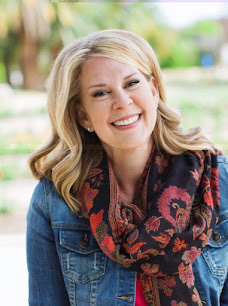

Her love of what we can learn from history compels her to write the true stories she unearths because she’s found that truth is indeed much more exciting and inspiring than fiction.

Wendy writes about family, faith, grief, art, and overcoming obstacles in life by coming to know who we really are—the children of God, and the descendants of incredible people who paved the way for us—even if they really struggled. Wendy believes in learning from our ancestors, honoring them, and then standing on their shoulders to become a better generation.

As an award-winning family history writer, Wendy’s debut novel, Once Upon an Irish Summer, released April 3, 2020. This book is a dual timeline historical fiction novel about a young, gifted artist suffering from debilitating grief, who finds healing and inspiration in her Irish ancestry, and goes on to paint a masterpiece.

The sequel, Celtic Winter: Eliza’s Story, released November 5, 2021. The storyline goes back in time to the little sister left behind in Ireland to keep her family alive, woven with present-day Beth’s continuing story as she races the clock with the young man she loves to find the only person who could save his mother’s life.

When Wendy is not researching or writing, she hikes, paints, loves being a church youth leader, binges on epic Bollywood movies, and hangs out with her greatest loves—her family.

~*~
Connect with Wendy:
Website: https://wendywilsonspooner.com/
Blog: https://wendywilsonspooner.com/blog
Facebook: https://www.facebook.com/authorWendyWilsonSpooner/
Instagram: https://www.instagram.com/wendyspooner/

Monday, August 30, 2021

Devotionals for the Heart: Division


A Church Divided Isn’t What Jesus Started
A devotional by Gena Anderson

“I have the right to do anything,” you say—but not everything is beneficial. “I have the right to do anything”—but not everything is constructive. No one should seek their own good, but the good of others.” – 1 Corinthians 10:23-24 (NIV)

History is full of conflict. World wars, civil wars, and religious conflicts fill the pages of history books. Humanity has been fighting for something, it seems, since the dawn of time. 

The Bible is filled with tales of nation against nation, Jews against Gentiles, and religious leaders against a Savior. People fighting should come as no surprise to us, yet many feel shocked, angry, saddened, and exhausted with all the division around us.

As we who live in the United States watch our country and our own friends and family be divided by their views on everything from racism to vaccines, we all react differently. Some fight back when met with resistance, others back down in retreat, and some go on offensive attack. I’ve stayed quiet, spoken up, offered sympathy, and everything in between. Recently I considered the damage that has resulted not to our country and relationships, but to the Body of Christ.

Jesus Christ came to create a united new body of people (Ephesians 2:14-15). Don’t misunderstand, He didn’t do that by accepting sin and rolling past ungodly conduct. Jesus was clear on God’s expectations, but He didn’t compromise his position on the whole “love one another” thing while making his points. That’s something we can’t say about how we’ve been acting lately.

When asked which commandment was greatest, Jesus says first to love God and second, to love others (Matthew 22:37-38). As Christians, we can’t allow our feelings to control our words and actions because those emotions often betray our love for the Lord and serve ourselves more than others. James 1:19-20 tells us to be quick to listen and slow to speak, as well as slow to become angry because doing so will cause us to dishonor God. When we reverse those recommendations and are quick to speak in anger and slow to listen, we are making God and Christians look bad, and dividing the church that was intended to unanimously carry Jesus’ message of love to the world.

So what are we to do when the world seems to be turned upside down and we feel in conflict with so many? If we listen to Paul’s words in the verse above, we would do good to remember that everything we think isn’t meant to be said out loud. Furthermore, the things we feel we have the right to say and do might need to be set aside for the good of others. In fact, I don’t see anything in those top two commandments about anyone's rights.

Jesus loved all of us so much that He gave His life for us, and silently endured persecution and crucifixion. We can surely bite our tongues for the sake of bearing our cross. In the name of Christian love, we can seek to listen and understand more than we strive to be heard. When we feel ourselves frustrated with the unprecedented situations around us we can take a moment to remember we serve a God of power, provision, and presence who wants us to point others to Him.

When we speak and act, we can let the Holy Spirit lead us to discern how to do so in a way that is rich with the love of God and others, and void of arrogance and pride. I am going to try to do better, what about you?

Let’s Pray: Lord, help us remember that you are always in control, and we have no reason to fear. Forgive us for allowing our emotions to control us. Help us to call on your Spirit and follow its prompting, and to be more skilled in listening than we are in speaking. We are so thankful for and humbled by your never-ending love. In Jesus's Name I pray. Amen.

~*~
Author Bio:

Gena Anderson is a Jesus-lover, writer, nurse practitioner, and blogger who loves to share wellness information and inspiration with the world around her. 


She is the author of The Well Woman: A Journey to Wellness Through Loving Jesus, which is available on Amazon.com.

Gena proudly holds the title of wife, mom, and the world’s most average CrossFitter. She loves writing, reading, traveling, and brownies. She's working on that last one.

Gena lives in Hutto, Texas with her husband and two children.

~*~
Connect with Gena:
Instagram: https://www.instagram.com/wellwoman.blog
Website: well-woman-blog.com
Email: wellwomanbook@gmail.com

Monday, January 15, 2018

Devotionals for the Heart: War, Veterans and Focusing on God


Keep Your Eyes On The Captain

A devotional by Don E. Atkinson

Some years ago, my Dad, a World War II veteran, told me of his voyage across the Pacific Ocean to the South Pacific theater of war. He and approximately 500 other soldiers were boarded on a liberty ship troopship (LST, as Dad so often referred to it) and set sail with a convoy of ships for the South Pacific theater.

LST’s were approximately 57 feet wide, 440 feet long and cruised at 11 knots (13 mph). Being designed as cargo ships, the LST’s were not heavily armed. Consequently, they relied primarily upon destroyers and cruisers in the convoy for protection from enemy aircraft, war ships, and submarines. Approximately 225 liberty ships were converted from cargo use to troop transport ships, able to transport 550 troops. President Roosevelt nicknamed these ships “ugly ducklings.”


Warning: Enemy Submarines and Crazy Kamikazes!

Because of their vulnerability, about 200 liberty ships were lost to submarine torpedoes, mines, explosions, Japanese kamikazes, and other aircraft during WWII. Dad noted there was a freight load of fear among his fellow soldiers. Due to their extreme fear, and in some cases also sea sickness, many soldiers could not eat much. When they noticed Dad eating well they asked him how he had such a strong appetite in such dangerous circumstances?

Look to the Captain

Dad told his inquirers that early in his wartime voyage he “looked up” to the bridge and noticed their captain did not appear worried. So, he asked himself, “Because the captain is calm in this situation, why should I worry?” Dad did not suffer from sea sickness and with a greatly reduced fear and anxiety level, ate well on his wartime voyage filled with several potential dangers.

How are you doing in your voyage of life? Are you fearing possible “emergencies” or “trials” or “losses” in your voyage that might be compared to deadly enemy submarines? Like Dad, look up to the captain of your boat, Jesus, the author and completer of your faith. Regarding the “voyage” ahead for each one of us, the author of Hebrews exhorted his readers:

“We must keep our eyes on Jesus, who leads us and makes our faith complete...So keep your mind on Jesus, who put up with many insults from sinners. Then you won’t get discouraged and give up." ~Hebrews 12:2a, 3 (The Promise).

Yes, keep your eyes and mind on Jesus. Your boat’s captain is calm, strong, and all-knowing. He will: (1) “lead” you in the various storms of your voyage; (2) help you with “discouragement;” and (3) bring you safely into the harbor. He accomplished this for a WWII soldier years ago and He can do it for you today and in the future!

At the beginning of this New Year, make a resolution to more regularly “look up” and gaze on Jesus, the pioneer and completer of your faith—and the “captain” of your little boat.

~*~
Author Bio: 
Don E. Atkinson was born and raised in Lincoln, NE. He attended Southern Nazarene University (formerly Bethany Nazarene College) and Colorado State University securing a Bachelor of Science degree. Later, he completed his Master of Science degree at Texas A&M University. 

He completed a significant amount of coursework towards a Master of Divinity (M.Div.) degree at Trinity Evangelical Divinity School (TEDS) and Midwestern Baptist Theological Seminary (MBTS).

Don has been active in his local church teaching adult Bible studies and preaching as needed. Married in December of 1982, he has three grown children. Currently, Don and his wife reside near Lyons, NE.


Connect with Don via his website (www.daybydayintheword.org) and his blog (daybydayintheword.blogspot.com).

Tuesday, December 19, 2017

Cozy Christmas Reads: Linda's story


What Would You Give?

A guest post by 
Linda Shenton Matchett

In times of war sacrifice is expected not only from the troops, but from those who remain on the home front. During WWII, Americans tightened their belts as food, clothing, rubber, metal and more were rationed. Women entered the workforce, and men left for parts unknown with the armed forces. Children played with toys that mimicked their parents’ lives and participated in air raid drills at school. However, the thousands of miles that distanced us from the conflict buffered the U.S. from the privation and challenges experienced by the European countries.

With only four miles separating France and England across the Straits of Dover on the English Channel, British citizens lived in fear of invasion. Street and subway station signs were removed to confuse possible raiding soldiers, and people were cautioned not to give directions to strangers. Anxious to win the war, the population was willing to do anything to further the cause.

One of the ways civilians helped was to give up their homes. According to Requisitioned, a book by John Martin Robinson, “the majority of houses of large size in Britain were requisitioned by the government…for use as barracks, homes for evacuees, schools, hospitals, works of art stores, strategic and military headquarters, billets and training premises, even prisoner-of-war camps.”

My story, “A Doctor in the House,” (part of The Hope of Christmas collection) takes place on a requisitioned estate north of London and explores what life was like for the homeowner to have his house converted to a convalescent hospital. Because the requisitioned homes were centuries old, they lacked central heating and other modern conveniences. Constructed of stone and brick, the structures held a constant chill during the cold winter months. Residents had to get creative to provide heat for themselves, and reports abound about furniture, paneling, and even staircases being broken up for firewood.

Nearly everyone used cigarettes at the time, and countless fires occurred due to careless smokers. Episodes are told about soldiers using priceless art work as dart boards, and at Tottenham Park in Wiltshire, the grounds were used as an ammo dump. An accidental explosion blew out every pane of glass in the house and the conservatory. Arundel Castle’s herd of red deer was hunted for food, and at Brocket Hall soldiers carved their names, addresses and phone numbers in the balustrade of the park bridge.

Hatfield House and Heath House served as the inspiration for my story’s setting. Hatfield House was used as a hospital and POW camp, and Heath House was taken over by the Red Cross as an auxiliary hospital for military personnel. The sheer volume of individuals stationed on these properties that previously housed several dozen people at most, created extensive wear and tear, but they did not suffer irreparable damage as so many others did.

Because of hard use or maltreatment, more than one thousand ancestral homes were destroyed or torn down after the war. In 1946, building materials were still rationed and taxes high. Repairs to country homes were done on a shoestring, make-do-and-mend basis, which meant bigger issues were covered over to be dealt with at a later time. But the generations who took over after the war were determined to make a go of it, and thanks to grants, opening their homes to the public, and the use of second-hand furnishings, thousands more homes have survived.

How would you feel about giving up your home?

~*~
Author bio:

Linda Shenton Matchett is an author, journalist, blogger, and history geek. 

Born a stone’s throw from Fort McHenry in Baltimore, Maryland, Linda has lived in historical places most of her life. 

She is a volunteer docent at the Wright Museum of WWII and a Trustee for her local public library. Linda is active in her church where she serves as treasurer, usher, and choir member. 

~*~
Blurb for Linda's novella, "A Doctor in the House", part of The Hope of Christmas story collection:

Emma O’Sullivan is one of the first female doctors to enlist after President Franklin Roosevelt assigned to England to set up a convalescent hospital, and she leaves behind everything that is familiar. 


When the handsome widower of the requisitioned property claims she’s incompetent and tries to get her transferred, she must prove to her superiors she’s more than capable. But she’s soon drawn to the good-looking, grieving owner. Will she have to choose between her job and her heart?

Archibald “Archie” Heron is the last survivor of the Heron dynasty, his two older brothers having been lost at Dunkirk and Trondheim and his parents in the Blitz. After his wife is killed in a bombing raid while visiting Brighton, he begins to feel like a modern-day Job. To add insult to injury, the British government requisitions his country estate, Heron Hall, for the U.S. Army to use as a hospital. 
The last straw is when the hospital administrator turns out to be a fiery, ginger-haired American woman. She’s got to go. Or does she?

~*~
Enter this book giveaway contest for your chance to WIN a copy of this book by filling out the entry form on the Rafflecopter widget below: 

SaveSavea Rafflecopter giveaway

Thursday, June 18, 2015

Love is in the Air: Author interview with Liz Tolsma

Super excited to introduce today's featured author Liz Tolsma! :) Liz loves writing historical romances. She experienced detours on her way to making her dreams come true but now she's working as an author and she has more than two books in her repertoire!

Now here's the exciting part for you--Liz will give away one paperback copy of her featured book, Remember the Lilies! You can enter by leaving a comment and your e-mail address toward the end of this post and by filling out the Rafflecopter widget.

I hope you will enjoy getting to know Liz via the author interview below.

Enjoy! :)

*Words by Alexis in bold, words from Liz not in bold

~*~
Alexis: Remember the Lilies is quite the captivating title for a book! Tell us about it.


Liz: Remember the Lilies is set in Manila during WWII. The Japanese interned almost 4,000 Westerners at Santo Tomas University for 37 months. In my book, Rand and Irene are two of the internees who must face starvation, cruel treatment, and espionage in order to survive.

Who or what inspired you to write Remember the Lilies? 


I was inspired by the 4,000 real men and women who survived those terrible days with grace and even humor.

Who is your heroine in this book? Describe her looks, style and personality. 

Irene Reynolds is a missionary’s niece who grew up in the Filipino jungle. She is beautiful and blonde and a Jean Harlow kind of way, but dresses plainly and doesn’t use much make-up. She doesn’t realize how pretty she is. She’s sweet and humble, though she does have quite a stubborn streak.

Who is your hero? What makes him interesting? What makes him different? What makes him fall in love (I’m guessing with your heroine)? 

Before the war, Rand Sterling was a jet-setting ladies’ man who owned two very successful night clubs in Manila. He’s daring. He falls in love with Irene because she’s so different from the socialites he’s used to associating with. Her quiet faith impresses him.

Why did you choose the Philippines for the setting of your book? 

My son, a U.S. Marine, has always loved the Pacific Theater of WWII. When I needed a 3rd idea for this series, he suggested that one be set there. As soon as he said that, I knew what story to use for the book.

What do you want your readers to treasure most about Remember the Lilies? 

The theme of the book is forgiveness. I want them to know that no matter what has happened in their lives, God offers them forgiveness.

What is the most beautiful part of the writing and publishing process for you? 

I love creating the stories and watching them come alive.

What is the most challenging aspect of being a writer? Why? 

Just finding the time to sit down and write! I have two children still living at home, a husband, and a very busy life. Some days there just aren’t enough hours for all that needs to be accomplished.

Why did you choose writing for a career? Or do you have a day job? Explain. 

It’s what I always wanted to do. My life took many detours along the way, and I do have a part-time job, but I decided that I needed to pursue my dream before I regretted not taking the chance.

Describe your writing space. What makes it unique or special to you? 

 It varies from day to day. Sometimes, I write at a small desk in my bedroom, or on my front porch, or in the family room recliner, or even in the car or at my daughter’s therapy session. Just wherever and whenever I have the chance.

What is your go-to food or drink when on deadline? 

Chocolate!

Are you working on your next book? If yes, what can you tell us about it? 

Yes. This series follows a trio of American women journalists in Europe during WWII. The first book is about a reporter in England during the London Blitz.

What is your favorite feature of springtime? 

The lack of snow ;) And I love to watch my garden come back to life.

Give us a glimpse of your personal life. Are you married with kids? What’s your favorite memory with your family? How do you spend your free time? 

I’m married to my high school sweetheart. We have a grown son and two daughters. All of my children were adopted internationally. The youngest has a variety of special needs. I have so many fond memories with my family, especially of the days each of our children joined our family. We love to be outdoors – camping, gardening, kayaking, hiking, snowshoeing.

If you could live anywhere in the world for at least once year and write about it, where would you go and why? 

I’d love to go back to Vietnam (we were there in 1995). It’s so special to us because we adopted our son there. The people were so kind and welcoming to us, so eager to please us, yet my heart breaks for that land which is so dark spiritually. I’d love to work to spread the gospel there.

Thanks for the interview, Liz! Now please leave a question for my readers to answer so they can enter your book giveaway contest.

Liz's question: If you had to give up one creature comfort for a year, which one would it be?

a Rafflecopter giveaway
~*~
Author bio:
Liz Tolsma has lived in Wisconsin most of her life, and she now resides next to a farm field with her husband, their son, and their two daughters. Add a dog and a cat to that mix and there's always something going on at their house. 

She's spent time teaching second grade, writing advertising for a real estate company, and working as a church secretary, but she always dreamed of becoming an author. 

When not busy putting words to paper, she enjoys reading, walking, working in her large perennial garden, kayaking, and camping with her family.
~*~
Blurb for Remember the Lilies:

How will two very different people find love—and survive the impossible circumstances of war?

In 1941 Rand Sterling was a wealthy, womanizing club owner and an American of note among ex-pats and locals alike. Now two years later, Rand is just another civilian prisoner of war—one whose planned escape from the Santo Tomas Internment Camp could put him and others in grave danger.

Irene Reynolds grew up as a missionary kid in the Philippine jungle. Now she works for the paranoid Japanese authorities, delivering censored messages to the other American prisoners in Santo Tomas.

When Irene’s negligence leads to Rand’s failed escape attempt, Rand is sent to the torture chambers of Fort Santiago—and Irene suffers under the weight of her guilt. Yet when she crosses paths with Rand again after his unexpected return to the camp, something more than mere survival draws the unlikely pair together.

As life in Manila becomes more and more desperate, and another threatening letter finds its way from Irene’s hands to Rand’s, the reluctant couple struggles to find a way to stay alive... and to keep their growing feelings for each other from compromising the safety of everyone around them.
~*~
Buy Liz's book:
Amazon.com - http://amzn.to/1MPVYka
Barnes & Noble - http://bit.ly/1IRJCYa
Christianbook.com - http://bit.ly/1dMVOhT
~*~
Connect with Liz:
Pinterest - https://www.pinterest.com/liztolsma/
Twitter - https://twitter.com/LizTolsma
Website - www.liztolsma.com